.png)


Afternoon Tiredness and the 3pm Crash: What Is Actually Happening

I run at lunchtime.
Not because it is optimal training. And it isn’t high intensity.
I used to train mostly in the mornings. That worked for years. Then I had children. My job changed. Mornings became less predictable.
So I tried evenings.
By 6pm, decision fatigue was real. Exercise shifted from default to discretionary. Adherence fell.
Lunchtime is simply the point in the day that remains structurally available.
But there is physiology behind why this timing works.
And it links directly to something I see in clinic every week: the 3pm crash.
What Causes Afternoon Tiredness?
Afternoon tiredness is common.
It is also rarely simple.
Most people describe it as:
Brain fog
Low energy
Irritability
Reaching for coffee or sugar
Struggling to focus on cognitively demanding work
For some, it is mild. For others, it is daily and intrusive.
In practice, it is usually the interaction of metabolic health, circadian rhythm, stress physiology, caffeine timing and prolonged sitting.
Occasionally, it reflects something measurable on blood tests.
Let’s break it down properly.
1. Post-Lunch Glucose Variability
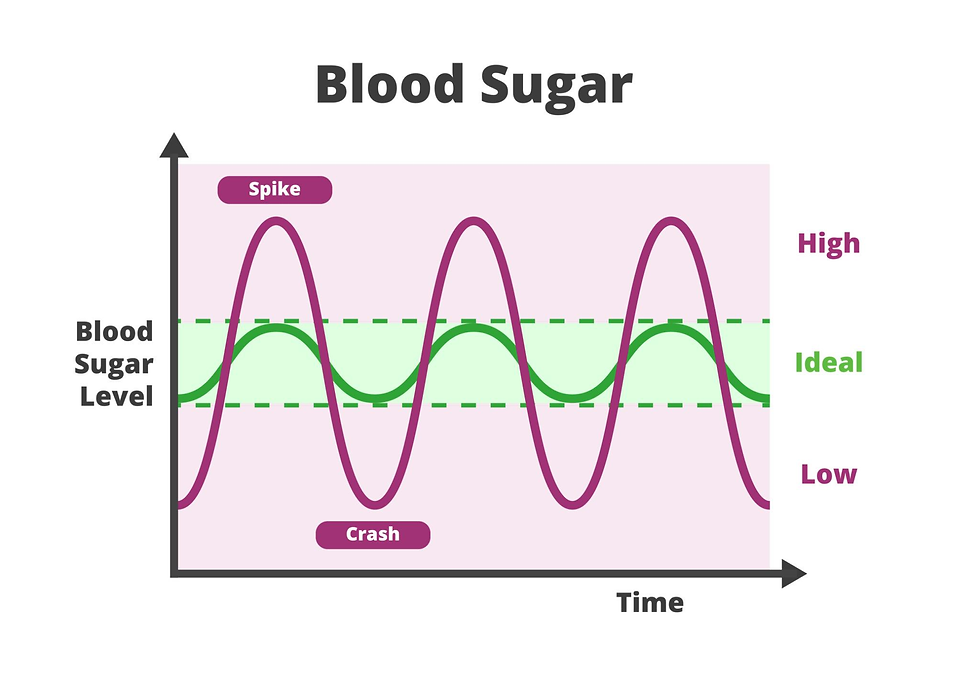
After lunch, blood glucose rises.
How sharply it rises, and how stable it remains afterwards, depends on:
Insulin sensitivity
Meal composition
Muscle glucose uptake
Baseline metabolic health
In early insulin resistance, HbA1c can remain completely normal while other markers begin to drift.
In clinic, this often looks like:
Fasting insulin creeping into double digits
Triglycerides in the 1.7–2.2 mmol/L range
Non-HDL cholesterol edging up
Waist circumference increasing despite stable BMI
Individually, these are “borderline”. Collectively, they are meaningful.
Mechanism:
Glucose rises
Insulin rises
Glucose falls relatively quickly
Subjective fatigue follows
Even modest swings can be felt as tiredness, fogginess or irritability.
For many busy professionals, this is one of the strongest physiological drivers of afternoon tiredness.
2. The Circadian Dip

There is a normal reduction in alertness between roughly 1pm and 4pm.
This is:
Independent of lunch
Independent of metabolic health
A core biological rhythm
Core body temperature dips slightly. Alertness reduces.
In metabolically stable individuals, it is mild.
When layered on top of:
Post-prandial glucose variability
Poor sleep
Stress
Dehydration
Caffeine rebound
It becomes much more noticeable.
The crash is rarely one thing. It is usually an overlap.
3. Cortisol, Stress and Cognitive Load
Cortisol peaks in the early morning and declines through the day.
If your morning has been:
Meeting-heavy
Decision-dense
Interrupted
High responsibility
By early afternoon, both cognitive and physiological load are real.
Add accumulated task-switching and reduced dopamine tone, and subjective fatigue makes sense.
This is not laziness.
It is biology interacting with modern work patterns.
4. Caffeine and Adenosine
Caffeine blocks adenosine receptors.
Adenosine builds through waking hours and contributes to sleep pressure.
If caffeine intake is:
Early
Rapid
High
When its effect wanes, accumulated adenosine produces a rebound dip in alertness.
Many people interpret this as “I need another coffee.”
Often, it is simply timing.
5. When Tiredness Is More Than Lifestyle
If afternoon fatigue persists despite:
Reasonable sleep
Sensible caffeine timing
Hydration
Regular movement
Balanced meals
It can be useful to look at blood tests for tiredness.
Common contributors I see include:
Elevated fasting insulin
Borderline triglycerides
Early insulin resistance with normal HbA1c
Iron deficiency, even without anaemia
Ferritin in the 25–40 µg/L range
Low-normal B12
Thyroid function trending upward within range
Vitamin D insufficiency
Low testosterone in men
Individually, these results are often dismissed as “fine.”
Collectively, they frequently explain persistent tiredness.
This is where structured blood testing can provide clarity rather than alarm.
Where Lunchtime Exercise Fits

Acute skeletal muscle contraction increases GLUT4-mediated glucose uptake independently of insulin.
Moderate aerobic exercise improves insulin sensitivity for several hours afterwards.
A modest lunchtime run or brisk walk can:
Blunt post-lunch glycaemic swings
Improve vascular function
Increase cerebral blood flow
Improve executive function modestly
Interrupt prolonged sitting
Buffer stress physiology
The effect size is not dramatic.
The consistency is what matters.
More importantly, it happens.
For busy adults, sustainability usually outweighs optimisation.
Timing may matter as much as intensity.
A Practical Framework for the 3pm Crash
If you feel tired every afternoon, think in layers:
Sleep quantity and quality
Caffeine timing
Hydration
Meal composition and protein intake
Prolonged sitting
Metabolic markers
Iron, B12, thyroid and vitamin D
Sometimes the solution is:
Adjusting lunch
Delaying caffeine
Walking for 15 minutes
Lifting twice per week
Running at lunchtime
Sometimes it is data.
And occasionally, it is identifying something that needs treatment.
The Bigger Point
Afternoon tiredness is rarely about willpower.
It is usually the interaction of:
Metabolic stability
Circadian biology
Neurochemistry
Stress load
Behaviour
For me, right now, the most reliable intervention is a 30-minute run at lunchtime.
Not because it is perfect.
Because it fits.
And the best health strategy is the one that integrates into your actual life.
If persistent tiredness, afternoon crashes or brain fog are affecting your work or training, a structured review of lifestyle and relevant blood tests can often provide clarity.
At New Jackson Healthcare, we look at patterns rather than isolated numbers.
If you would like to explore this properly, you can book a free 15-minute call to see whether testing or a lifestyle review would be appropriate.
No pressure. Just a sensible conversation.



Comments